Learn Your Physiology. Map Your Cycle. Understand Your Symptoms.
A structured, integrative method that helps you interpret hormonal and nervous system patterns so you can plan your work, support your energy, and make informed decisions about your health.
Your Body Produces Patterns. We Learn How to Read Them.
WHAT YOU WILL LEARN
A Practical Framework for Body Literacy
Inside the course you will learn how to:
• understand each phase of your cycle physiologically
• map energy, mood, cognitive, and physical patterns
• identify what symptoms are common vs signals
• interpret your tracking data
• plan work and recovery based on capacity
• explore integrative support options

From Symptom Tracking to Pattern Recognition
Most tracking stops at data collection.
This framework teaches you how to:
data → interpretation → strategy
You will build:
• a personalized cycle map
• a symptom meaning guide
• a phase-based planning system
• a nervous system support structure
so your information becomes usable.
What Changes When You Understand Your Patterns
• energy becomes more predictable
• low-capacity days are planned, not pushed through
• mood changes have context
• symptom meaning becomes clear
• care decisions become informed
• burnout cycles decrease
Understanding Changes Everything.


Inside the course:
✔ learn your physiology
✔ map your cycle
✔ interpret symptom patterns
✔ plan work with your capacity
✔ explore integrative support options
Testimonials
I immediately appreciated the thoroughness, expertise, and knowledge in this course. It was empowering to feel as though I had some control by learning how to chart and learning about how MY cycle works.
Meg J.
I have worked with Talie on a range of female-health related issues that in general take many months to have consistent progress. I say go for it - and your health will get better and better!
Karen K.
“For the first time I understand what my symptoms are communicating instead of guessing or searching online.”
Jen D.
FAQS
Does this course offer medical treatments for specific issues?
Yes and no.
This course does not diagnose, prescribe, or provide individualized medical treatment, because it is an educational program and not based on your personal medical history.
However, it does teach:
• common physiological patterns many women experience
• how symptoms often relate to specific phases of the cycle
• the range of support options that are frequently used and available
• when certain types of strategies are typically considered
• how to recognize patterns that may benefit from clinical evaluation
The goal is to help you understand what is happening in your body, what kinds of approaches are commonly used in different situations, and when self-support is appropriate versus when it may be useful to seek additional care.
This gives you context and language to make informed decisions.
Will I learn what I can work on myself and when to seek care?
Yes. The course includes guidance on:
• common cycle variability
• patterns that often respond to lifestyle and regulation strategies
• signals that may benefit from additional evaluation
so you can make decisions with context instead of guessing.
I've tried tracking before and it didn't help. How is this different?
Most tracking systems stop at data collection.
You log symptoms, but you’re never taught:
• what is happening hormonally in each phase
• why certain symptoms cluster at specific times
• which patterns are common vs signals
• what support strategies are typically useful during different phases
This method teaches you how to:
data → interpretation → timing → strategy
You learn what your body is doing physiologically, how that affects mood, cognition, energy, and physical symptoms, and which types of support options are often appropriate in specific phases.
So tracking becomes usable.
Not just a record — but a guide for:
• planning work and recovery
• adjusting expectations
• choosing support strategies
• deciding when additional care may be appropriate
YOUR INSTRUCTOR
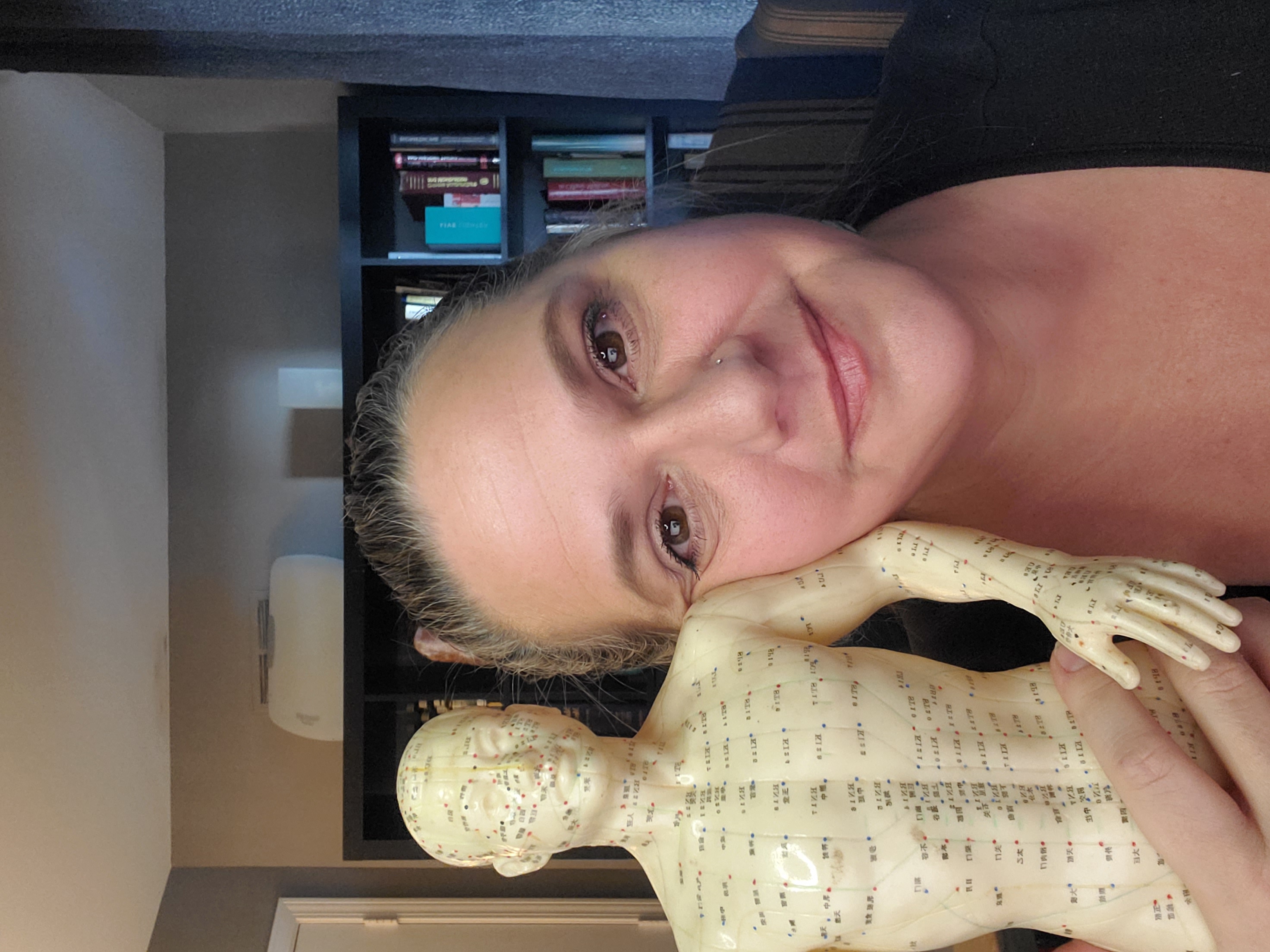
Talie Leong L.Ac, MSOM
Women's Health
&
Menstrual Cycle Educator
Education & Training:
MS, Oriental Medicine • BS, Nutrition • NADA Protocol • HeartMath • Reflexology • Tomatis Method • Qi Gong Studies
Talie is a licensed acupuncturist and educator with more than 15 years of experience in women’s health, stress physiology, and hormonal patterns.
In practice, she saw that most women weren’t tracking their symptoms or paying close attention to their cycles — not because they didn’t care, but because no one had ever shown them what to look for.
Many of her patients had been told their experiences were “normal” and something they simply had to live with, without being given any framework to understand patterns, timing, or variability.
She frequently found that women are given no language for the cycle as a rhythm, no guidance on which symptoms were common in specific phases, and no way to connect energy, mood, cognition, and physical changes into something meaningful.
What often happens when women do begin tracking, is they are often left with pages of data and no way to interpret it. They still dodn’t know what was happening physiologically, what their patterns mean, or what options were available to support themselves.
That gap — not just in tracking, but in knowing what to track, how to understand it, and what to do with it — became the foundation of her work.
Talie developed an integrative, education-first method that combines menstrual cycle physiology, nervous system regulation, and Chinese medicine pattern recognition into a practical system for daily life.
She teaches women how to:
• recognize that their bodies follow a rhythm
• identify which patterns are common and which are signals
• understand what is happening in each phase of the cycle
• track meaningful data without overwhelm
• explore support strategies that are appropriate for specific times in the cycle
• plan work, recovery, and self-care around biological capacity
Her work focuses on body literacy as a practical skill — one that reduces confusion, increases clarity, and helps women make decisions with more confidence and less guesswork.